
What Type of Sewer Pipe Is in Your House?
Santa Clarita Sewer Repair walks through the sewer lateral materials found in Santa Clarita Valley homes by era — clay, Orangeburg, cast iron, ABS and PVC — how each one typically fails, and why the age of a house is only a starting point until a camera shows what is in the ground.
Bookings aren't open yet. Leave your name and number; your message is recorded, and you'll get one message when a local installer is available.
The line as it is found
 Illustration
The repaired line (illustration)
 Illustration
The age of the house is a clue, not an answer
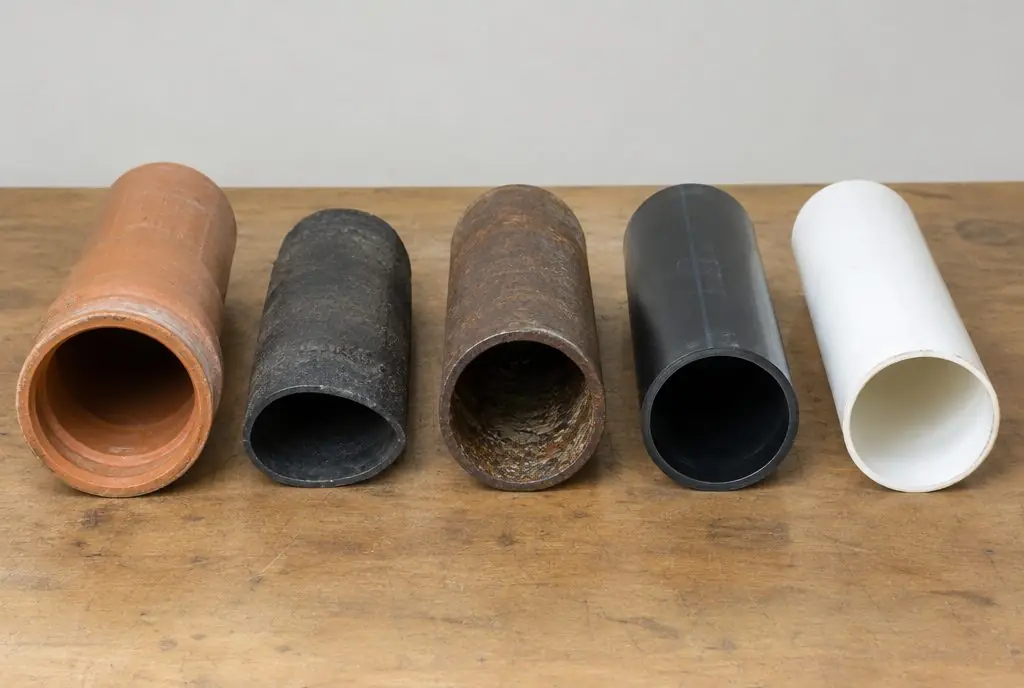
The material of a sewer lateral usually matches the era when the house was built, because builders used what was standard at the time. But many laterals have been partly replaced since, a repair may have added a different material, and the pipe under the house can differ from the pipe in the yard. The era gives a likely answer; a camera inspection gives the real one.
Two houses on the same street can have different pipe in the ground, because one of them has already had a repair.
Typical materials by era in SCV homes
| Era of the house | Typical lateral material | Typical failure | Where it is common in the valley |
|---|---|---|---|
| 1940s–1960s | vitrified clay, sometimes Orangeburg; cast iron under the house | roots at joints, cracks; Orangeburg deforms and collapses | Old Town Newhall, older Saugus and Canyon Country streets |
| 1960s–1970s | clay, Orangeburg in some tracts, early ABS | roots, offset joints; fiber pipe flattening | older tracts in Saugus, Newhall and Canyon Country |
| 1980s | ABS or PVC, cast iron under some slabs | sags from settled bedding, offset joints | Valencia and Canyon Country tracts |
| 1990s onward | PVC or ABS | sags, grease build-up, damage from later digging | Stevenson Ranch, Westridge, newer Valencia and Saugus neighborhoods |
The table describes typical patterns, which vary by builder and by later repairs.
Clay and Orangeburg in the oldest neighborhoods
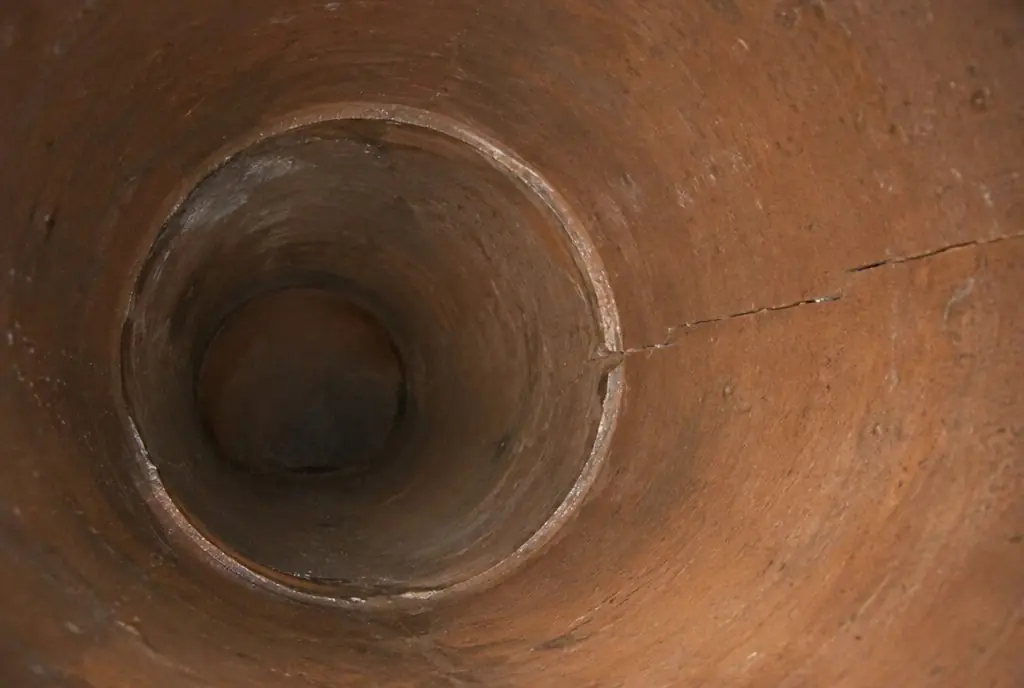
Vitrified clay is durable as a material, but it was laid in short sections whose joints let roots in as the seals age. Orangeburg, a pipe of wood fiber and pitch, was used for some laterals in the decades after the war; it softens and deforms into an oval over time and can collapse. Both are common finds in the older streets of Newhall and the first tracts in Saugus and Canyon Country.
Cast iron under the house
Many homes have cast iron drain pipe under the slab or crawlspace even when the yard lateral is clay or plastic. Cast iron builds up scale inside and corrodes from the bottom over decades. It is inspected separately on the camera video, because work under a house is a different job from work in the yard.
ABS and PVC in newer homes
ABS and PVC plastic laterals have glued joints and smooth walls, so roots and cracks are much less common. Their typical problems are sags where the bedding settled, offset joints after ground movement, grease build-up from kitchens, and damage from later digging for landscaping or utilities. A well-installed PVC or HDPE lateral commonly lasts decades, depending on soil, roots and installation.
What the material means for the estimate
The material helps predict which methods are possible: round clay or plastic often suits lining, continuous clay or cast iron suits bursting, and collapsed Orangeburg usually means a trench. The estimator on this page shows the typical Santa Clarita Valley range for each method and length, and the camera inspection, listed as its own item, confirms which apply.
Where this leads
- Service page: Sewer Camera Inspection — A recorded video of the whole lateral that shows roots, cracks, offsets and bellies — the step every repair decision starts from.
- Local page: Sewer line repair in Newhall
- All services and typical prices: sewer line repair in Santa Clarita
- More illustrated guides: Sewer Line Guides
Check availability and the price range for this setup
Bookings aren't open yet — describe the sewer line and you get a Santa Clarita price range right here. Typical Santa Clarita Valley installed prices for residential sewer lateral work, labor and materials. This is a market estimate, not a quote. Permit fees, inspection fees and street restoration charges, where they apply, are not included.